
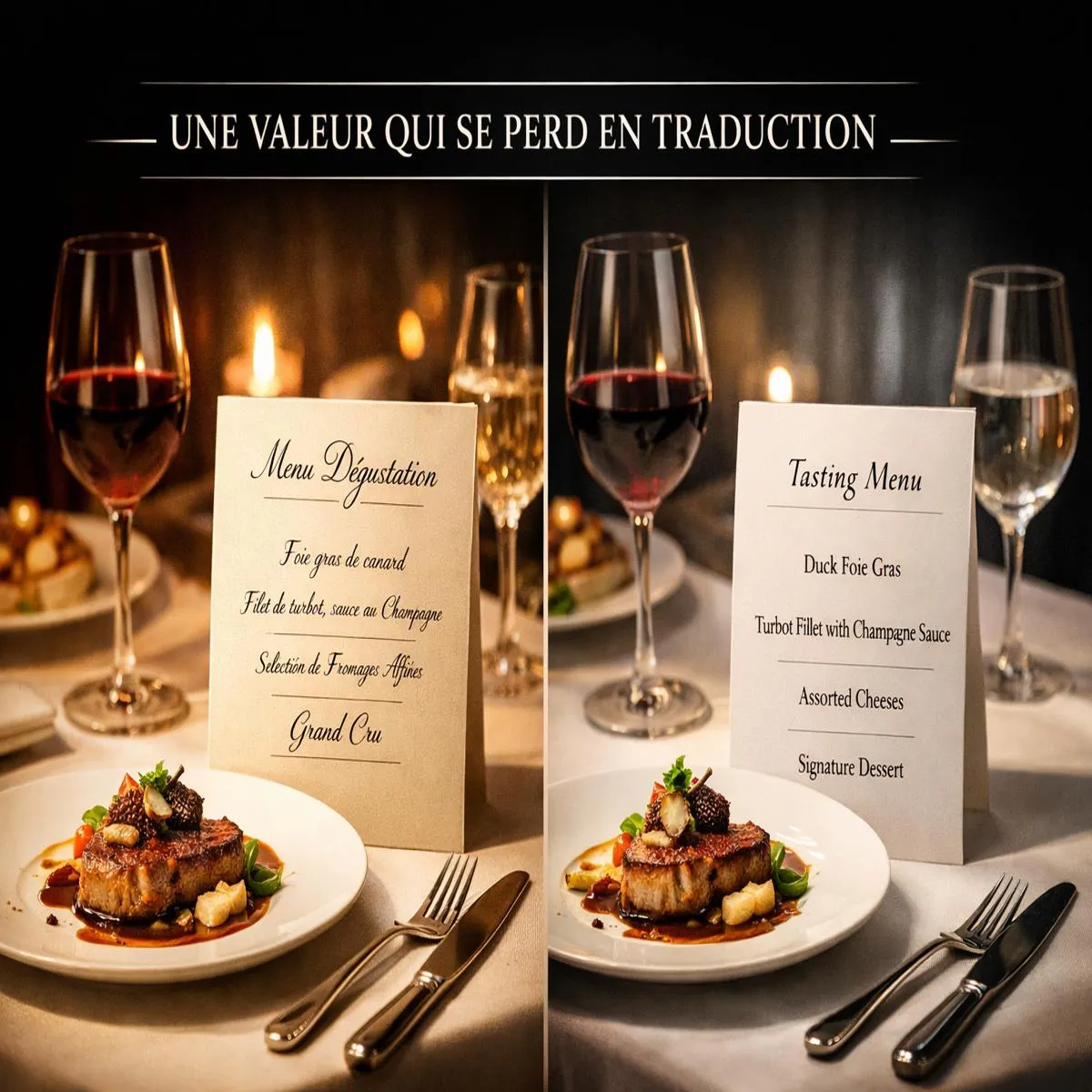
Yes, it may seem counter-intuitive. But it’s true.
And I see it every day.
Many companies think they’re doing the right thing:
✔️ Website translated into English
✔️ “International” product sheets
✔️ Neutral tone to appeal to everyone
The result?
👉 They become interchangeable. You can see this phenomenon here on LinkedIn, where everyone is saying more or less the same thing.
The reality is a little less smooth:
Not all languages produce the same value.
And some… can even undermine your positioning if you use them incorrectly.
Let’s look at some very concrete examples:
🇫🇷 French It’s the language of desire. Of luxury. Of taste. Of sensory precision.
It’s no coincidence that:
– Gourmet menus remain in French all over the world (even though Chinese haute cuisine is remarkable, you wouldn’t expect a menu written in Chinese)
– Wines keep their appellations
– Perfume brands speak French… even internationally
👉 French creates a sense of rarity.
🇬🇧 English It’s the language of volume. Of performance. Of distribution.
But also of standardisation.
Everyone speaks English, everyone speaks Globish.
So no one stands out in English anymore.
And this is where the mistake becomes strategic:
👉 Translating a premium French brand into English, without adaptation… often means making it ordinary.
The figures back this up:
📊 76% of consumers prefer to buy in their own language (source: CSA Research)
But above all, they expect an experience tailored to their culture, not just a translation.
Ultimately, the real question isn’t linguistic. It’s about business: 👉 What perception do you want to create?
– Premium?
– Accessible?
– Technical?
– Desirable?
Because a language doesn’t just translate: it positions your company.
At Alpis, this is exactly where it all happens. We don’t just translate words. We also work on what your client will feel.
And that changes everything. Find out more here: